Can AI Really Make Us Better Shooters? A Full AI shooting training
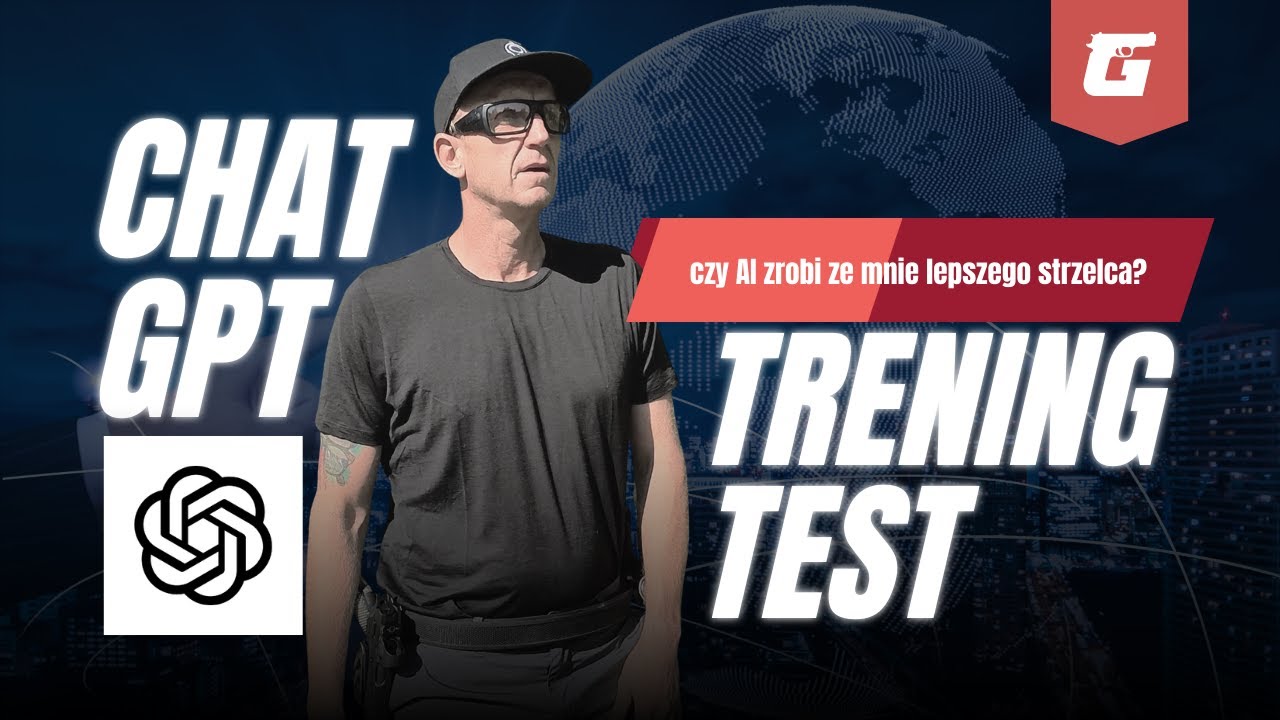
AI Shooting Training? Can ChatGPT Improve Your Shooting?
In the Good Guys With Guns community, we talk a lot about responsibility, growth, and continuous improvement — not just as shooters, but as parents, partners, and people who want to be strong for those we love. So when we saw that you can ask AI to prepare a complete 45-minute IPSC training session, one question naturally came up:
Can artificial intelligence actually help us become better shooters?
Or is it just a fun gadget with no real value?
We decided to find out.
You can watch the full experiment here:
👉 WATCH THE VIDEO
Below you’ll find a breakdown of the training, what worked, what didn’t, and what AI can realistically offer us as responsible firearm owners.
Section 1 — A Warm-Up Most Shooters Forget
AI started with something simple… and surprisingly important: a slow, controlled warm-up.
Many of us enter the range, hang a target, pull out the gun and — bang bang bang — we’re already punching holes. No rhythm, no reset, no mental preparation. But safety and consistency both start with a clear head and a stable foundation.
AI reminded us of a basic truth:
even the best shooters begin with breath, focus, and fundamentals.
Section 2 — First Live Shots: Singles and Slow Doubles
AI divided the opening section into two drills:
1. Single Shots — five rounds focused on the break
AI didn’t specify whether to start from low ready or from extension, so we did both. A nice bit of variety without complicating the drill.
2. Slow Doubles — three repetitions of two-shot strings
The key rule: the second shot only breaks when the sights are clearly back on target.
Funny detail: AI labeled them “slow doubles,” but later wanted us to speed up pairs — something we only noticed during editing. A classic reminder to read the instructions carefully… even when the instructions come from a robot.
Section 3 — Controlled Pairs and a Mini Build Drill
This is where the tempo picked up.
Controlled Pairs
AI called it a “control cycle,” which sounded a bit awkward, but the idea was on point: transition from slow doubles into more dynamic, yet still controlled pairs.
Mini Build Drill
Starting from a high position, this one felt very IPSC-like — quick, clean, energetic. A great drill for pushing speed without sacrificing technique.
At this stage we started feeling the flow — the training was moving smoothly without rushing.
Section 4 — Precision at 25 Meters
AI shifted the focus to long-range fundamentals with two exercises:
1. Single Shots — 2×5 rounds
Pure concentration, pure trigger control. Perfect for grounding yourself after faster drills.
2. Three-shot groups — three repetitions
This drill wasn’t bad… but it didn’t bring anything exciting or deeply useful either. Sometimes precision work is like that: steady, necessary, but not thrilling.
Section 5 — Dot Drill (Dot Torture Style)
Twelve slow, clean shots into a small 5 cm target.
And here’s the twist: we started noticing that the session was moving way faster than planned. By this point, AI expected us to be around the 35–43 minute mark.
We were nowhere near that.
So, in true GGWG spirit — if something is good, repeat it with even more intention. We placed a second patch and ran the drill again: slower, cleaner, more deliberate.
Section 6 — The Ending: AI Shooting Training vs. Real-World Rhythm
The AI wanted us to finish with three slow shots at 10 meters. But since the whole “45-minute plan” took only about 25–27 minutes, we decided to adjust the ending and add our own twist.
I won’t spoil it here — you’ll see exactly how we wrapped up the session, and what happened next, in the video.
What AI Did Surprisingly Well
After finishing the session, we listed everything the AI nailed — and honestly, it did a lot right:
✔️ A clear, logical training structure
Warm-up → singles → doubles → controlled → precision → finish.
✔️ Great variety
Different distances, different tempos, different goals.
✔️ Purpose-built drills with specific focus points
Every drill had a “why,” not just a “what.” That alone can transform a training session.
✔️ It forced us to stick to a plan
No wandering, no guessing, no random magazine dumps. Just a structured, responsible approach to improvement — something we value both on the range and in life.
Where AI Fell Short
Nothing’s perfect — especially not a language model pretending to be a shooting coach.
❌ The timing was way off
45 minutes on paper → 25–27 minutes in reality.
❌ Weird mix of English and local terms
“Control cycle”? Not ideal.
❌ The printable version was stripped of details
No distances, no goals, no focus points — the very things you must remember on the range.
These aren’t dealbreakers, but they show why we still need human judgment.
So… Can AI Make Us Better Shooters?
Yes — but not because AI is magical.
AI makes us better because it forces:
- clear structure
- intentional practice
- measurable progression
- discipline instead of randomness
And that applies not just to shooting. As responsible adults — often balancing family, work, budgeting, training, and personal growth — tools that help us plan and stay consistent are incredibly valuable.
AI can give us a plan.
But we are the ones who make the plan work.
📂 Download: TRY this Full AI Shooting Training PDF
Your Turn — Let’s Talk as a Community
Because GGWG is always about us, not me:
- Would you use AI to plan your shooting sessions?
- Do you already use it?
- Or do you have your own system that works better? Share it — we learn together.
And if you haven’t seen it yet:
Thanks for being part of this community. See you on the range — and in the comments.