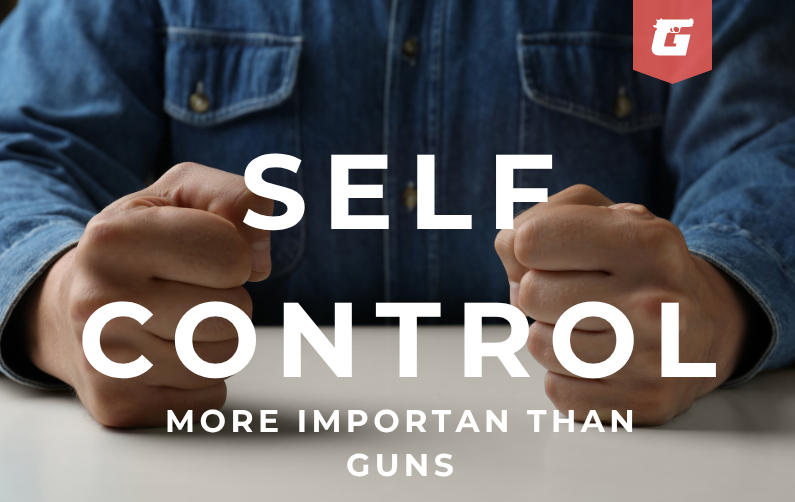
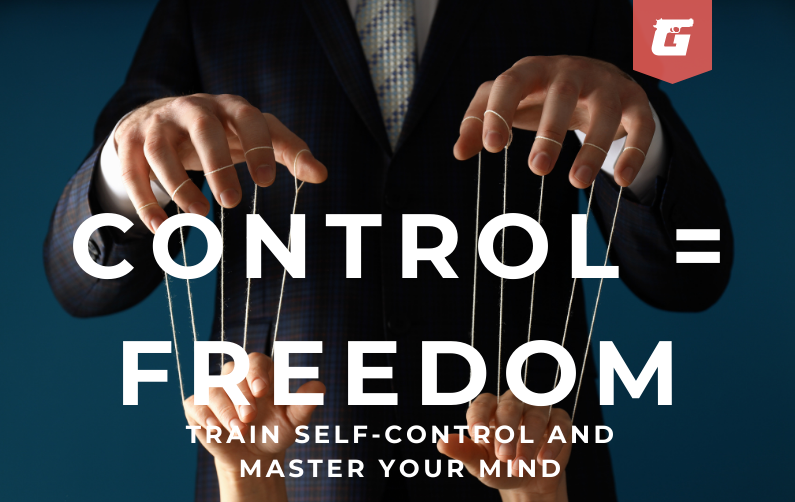
Control = Freedom: How to Train Self-Control and Master Your Mind
Self-control training is the quiet power behind discipline under pressure. That’s what separates a good shooter from a great one — and it starts long before we step onto the range.
Table of Contents
- Breathing Drills
- Pause Before You Speak
- Cold Exposure and Physical Discomfort
- Set Small Rules — and Keep Them
- Reflect Daily
- Control = Freedom
- How to Bring It Into Training
- Our Takeaway
Let’s break down a few practical ways to train the mind first
Self-Control Training Techniques
— the same way we train shooting, fitness, and focus.
1. Breathing Drills
When stress hits, breathing is often the first thing we lose. That’s why training it matters. Try this pattern: inhale for 4 seconds, hold for 4, exhale for 4. It sounds simple, but it resets your nervous system and gives your mind a split second to choose response over reaction.
Next time your heart rate spikes — on the range, during an argument, or after a bad day — use that breath cycle. It’s like hitting “reset” for your mind.
2. Pause Before You Speak
Words can do more damage than a bad shot. When emotions rise, practice a simple rule: three-second pause before reply. You’d be surprised how often that short pause changes everything.
In those three seconds, we take back control. We choose response instead of reaction. This habit builds emotional discipline — the kind that helps us make good calls under stress, both on and off the line.
3. Cold Exposure and Physical Discomfort
Control grows in discomfort. When we face stress on our terms — like cold showers, early morning runs, or extra training drills — we teach our brain that discomfort is safe, manageable, and temporary.
This type of training builds mental armor. When real chaos comes — whether in a match, a defensive scenario, or life — our mind already knows how to stay steady. As we say: if you can stay calm in cold water, you can stay calm anywhere.
4. Set Small Rules — and Keep Them
Discipline isn’t built in one day. It’s built through small promises kept. Go one week without sugar. Commit to dry fire three times a week. Stick to a bedtime for seven days. These aren’t just lifestyle habits — they’re self-control drills.
Every time we follow through, our brain learns this: “I can trust myself.” That trust becomes the foundation of confidence — on the line, in our family, in our finances, in every part of life.
5. Reflect Daily
Before bed, ask yourself two questions:
- Where did I lose control today?
- Where did I stay calm when it mattered?
Don’t judge — just notice. Awareness is where growth starts. Over time, we begin to see patterns: the same triggers, the same wins. We learn how to prepare for stress before it hits. That’s real training — not just muscle memory, but mental memory.
Control = Freedom
We often hear that freedom means doing whatever we want. But real freedom is the opposite — it’s being in charge of ourselves.
When we control our impulses, we’re free from them. When we master our emotions, no one can manipulate us. When we can choose peace, we’re no longer ruled by chaos. That’s strength — quiet, steady, and powerful.
This is the essence of the “warrior in the garden.” The ability to act when needed, but the wisdom to wait. Control gives us choice. Choice gives us freedom.
How to Bring It Into Training
Start adding control work to your range sessions and dry fire practice. If you’re building a structured dry fire training routine, this is where mental discipline becomes a force multiplier.
- Before every drill – one deep breath and a 3-second focus check. Train calm before speed.
- When you miss a shot – don’t rush the next one. Reset your stance, breathing, and mind.
- End of session reflection – what moments tested your patience today? How did you respond?
If you want practical breakdowns, drills, and real-world examples of how we work on these skills, make sure to follow our YouTube channel. We regularly share step-by-step training insights on how to improve as a shooter — from mindset and discipline to technique and consistency. 👉 Follow GGWG on YouTube
These habits build more than accuracy. They build composure — and composure saves lives.
Our Takeaway
Self-control is a skill, not a gift. It’s trained just like draw speed or reloads — through repetition, awareness, and intention. The stronger our control, the calmer our presence. And the calmer we are, the more effective we become — in shooting, in family life, in everything that matters.
At GGWG, we believe that strength starts within. That’s what “więcej niż strzelanie – more than shooting” really means.
What About You?
How do you train your self-control? What’s the hardest part for you — patience, consistency, or staying calm under stress? Share your thoughts below — let’s grow together.