Shooting Competition Rules: Why Every Shooter Should Know Them Before a Match?
Shooting sports are about much more than accuracy and fast stage times. Every discipline, every stage, and every organization works according to a specific set of rules. For many beginners, the biggest surprise at their first match is not the difficulty of the course of fire, but the number of regulations they need to understand.
In practice, it comes down to one simple truth: the better we know the rules, the better we shoot and the safer we are at a match. This is not just theory. Rule knowledge directly affects performance, safety, and overall confidence on the range.
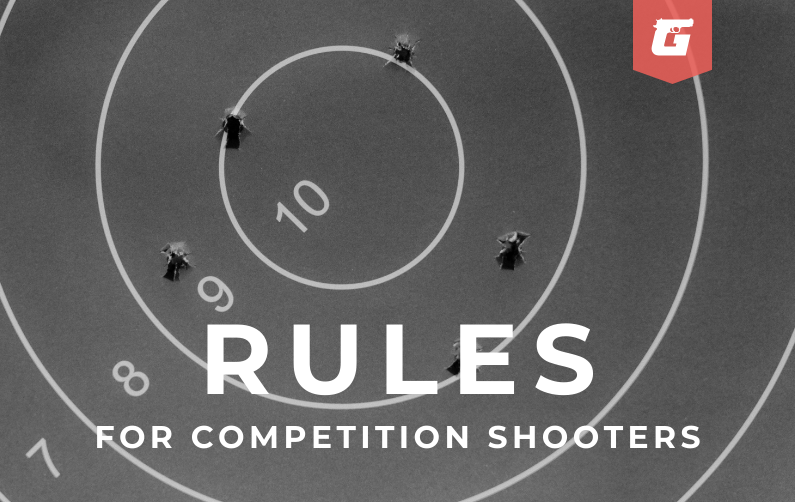
In the shooting community, we often say that responsibility and safety are the foundation of our sport. Shooting Competition Rules Rulebooks were not created to make competition harder. They exist so that everyone can compete in a safe, fair, and structured environment.
Rules Are the Foundation of Safety
The most important reason rules exist in shooting sports is safety. Every organization, whether it is IPSC, IDPA, PRS, or another discipline, starts by defining how firearms must be handled safely.
The most important examples include:
- muzzle direction control,
- the safety angle rule, such as 180 degrees,
- keeping the finger off the trigger when appropriate,
- loading and unloading procedures,
- responding correctly to range officer commands.
At a match, everything happens fast. Shooters move between shooting positions, reload, navigate obstacles, and react under time pressure.
Without clear rules, chaos would be unavoidable.
That is why competition rules always make one thing clear: safety matters more than the score.
Knowing the Rules Directly Affects Your Match Result
Many shooters focus only on technical training: accuracy, transitions, recoil control, and trigger work. Those skills matter, of course, but lack of rule knowledge can destroy all that preparation.
Common match situations make this obvious:
- a shooter hits every target but breaks the safety angle and gets disqualified,
- a competitor forgets the required start procedure and receives procedural penalties,
- a shooter fires at the wrong moment and loses valuable points or time.
The best competitors do not win with speed alone. They also win because they understand the rules. They know where they can save time, where they must change position, and where the rulebook requires a specific action.
Stage Briefings Are the Instruction Manual for the Problem in Front of You
Every stage at a match has a briefing, meaning the official description of how that stage must be shot. For many new shooters, it seems like a formality, but in reality, it is one of the most important pieces of information before the buzzer.
A stage briefing may define:
- the start position,
- the order of actions,
- mandatory reloads,
- use of cover,
- penalty targets and required targets,
- movement restrictions.
This is where we learn whether:
- shooting on the move is allowed,
- a reload must happen in a specific location,
- certain stage elements are mandatory.
Shooters who study the briefing carefully often find a better plan for shooting the stage. Sometimes the difference between two stage plans is only a few seconds, but in practical shooting, that can mean everything.
The Most Important Shooting Organizations and Disciplines
The world of shooting sports is incredibly diverse. Each organization has its own style of competition and its own rules.
That means a shooter who competes in multiple disciplines often has to learn completely different procedures and expectations.
IPSC – International Practical Shooting Confederation
IPSC is one of the best-known practical shooting organizations in the world.
Its philosophy is built around three elements:
- accuracy,
- speed,
- power.
IPSC stages give shooters a high level of freedom in how they solve the course of fire. The IPSC rulebook covers:
- safety rules,
- scoring,
- equipment divisions,
- stage design principles.
IDPA – International Defensive Pistol Association
IDPA was created as an alternative to IPSC, with more emphasis on realistic defensive-style scenarios.
Key features include:
- use of cover,
- specific target engagement order,
- more procedural requirements,
- equipment restrictions.
A shooter coming from IPSC to IDPA is often surprised by how much importance is placed on procedure and sequence.
PRS – Precision Rifle Series
PRS is a dynamic long-range rifle discipline.
Success in PRS depends on:
- precision at distance,
- fast position changes,
- wind reading,
- using barricades and support positions effectively.
The PRS rules define, among other things:
- time limits,
- hit scoring,
- position and barricade requirements.
Steel Challenge
Steel Challenge is a discipline built around shooting steel targets and is governed by the Steel Challenge Shooting Association (SCSA).
Its main characteristics are:
- fixed and repeatable stages,
- time as the main scoring factor,
- no scoring zones, because a hit is a hit.
Steel Challenge is often recommended for beginners because the stages are easier to understand and repeat than many other dynamic disciplines.
Skeet
Skeet is one of the classic clay target disciplines and also an Olympic event.
Shooters move across eight stations and engage clay targets launched from two houses.
Key elements include:
- timing,
- shotgun tracking and lead,
- consistent movement.
The rules precisely define the order of fire and the target presentation sequence.
Trap
Trap is another Olympic clay target discipline.
Targets are launched away from the shooter at varying angles from a trap house in front of the firing line. Shooters rotate through five stations.
Trap requires:
- very fast visual reaction,
- strong eye-target coordination,
- solid shotgun technique.
USPSA – United States Practical Shooting Association
USPSA is one of the largest practical shooting organizations in the world and the leading governing body for practical shooting matches in the United States.
Although it is similar to IPSC, there are differences related to:
- equipment divisions,
- scoring details,
- match formats.
PZSS – Polish Sport Shooting Federation
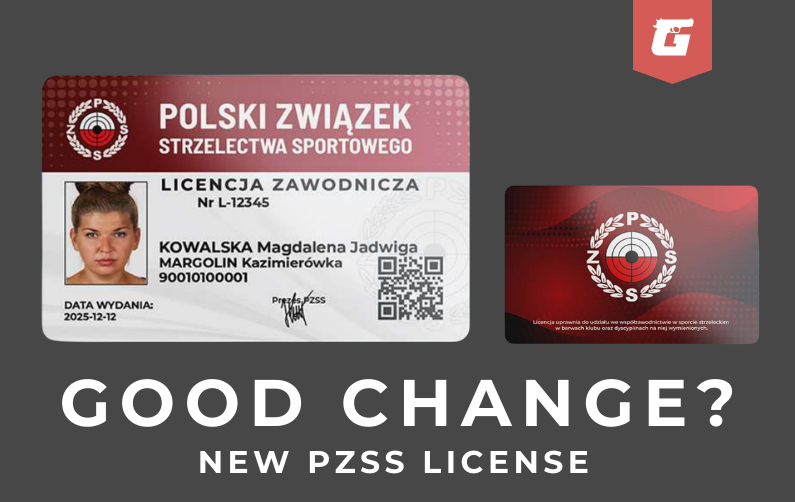
PZSS governs sport shooting in Poland and is responsible for:
- competition licenses,
- sport classes and rankings,
- national competitions,
- rules for Olympic-style shooting disciplines.
Why Reading the Rulebook Before a Match Is Worth It
You Avoid Penalties
Many shooters lose points because of small procedural mistakes that could have been avoided by reading the rules ahead of time.
You Plan Stages Better
When you understand the rules, you can build a better stage plan before you even step into the shooting area.
You Reduce Stress
Competing becomes far less stressful when you know what to expect and what is required from you.
You Build a Reputation as a Responsible Shooter
Match officials and experienced shooters appreciate competitors who understand the rules and follow procedures correctly.
Where to Find Official Shooting Competition Rules
The best source of information is always the official website of each shooting organization. That is where you will find current rulebooks, updates, equipment rules, and official interpretations.
Useful official sources include:
- IPSC – https://www.ipsc.org
- IDPA – https://www.idpa.com
- Precision Rifle Series – https://www.precisionrifleseries.com
- USPSA – https://www.uspsa.org
- Steel Challenge Shooting Association – https://scsa.org
- PZSS – https://www.pzss.org.pl
These sites usually include:
- current rulebooks,
- safety rules,
- equipment division information,
- official interpretations,
- recent updates and changes.
Because rules can change from season to season, it is a smart habit to check the latest version before your first match in any discipline.
Sometimes the Best Way to Learn the Rules Is to Become a Match Official
One of the best ways to truly understand shooting rules is to get involved in match organization and officiating.
In disciplines like IPSC, range officers need to know the rules extremely well because they are responsible for:
- safety on the stage,
- rule interpretation,
- supervising the course of fire,
- applying penalties correctly.
That means officiating gives you a chance to understand the sport from the inside, not just from the shooter’s perspective.
Many strong competitors improved their understanding of the sport by helping at matches or becoming officials themselves. It is a practical way to learn why rules exist and how they are applied in real situations.
If you want more context on that path, watch this video: Is It Worth Becoming an IPSC Referee? Real Benefits of Working as an RO.
FAQ for Beginners
Do I need to know the entire rulebook before my first match?
No. You do not need to memorize every section, but you should understand the basic safety rules, start procedure, and the most common penalties.
Can a stage briefing be different from the rulebook?
No. A briefing is a practical application of the rulebook for a specific stage. It should not contradict the official rules.
What happens if I break a safety rule?
In most disciplines, breaking a serious safety rule results in an immediate disqualification.
Can I ask the range officer or match official about a stage?
Yes. You absolutely should ask before the start if anything is unclear.
Are rules very different between disciplines?
Yes. IPSC, IDPA, PRS, trap, skeet, and Steel Challenge all have different priorities and different competitive structures.
What is the best way to learn the rules?
The best approach is to combine three things: read the rulebook, watch matches, and gain experience by competing.
Responsibility Is Part of the Sport
Shooting is not just about technique and competition. It is also about responsibility, both for our own actions and for the safety of others.
Knowing the rules and understanding stage briefings is one of the simplest ways to show that we take that responsibility seriously.
And in our community, that is what matters most: safety, growth, and a shared passion for shooting sports.
Thinking About Getting Into Shooting Sports in Poland?
Many people discover shooting competitions first and then start thinking about owning their own firearm. If you are based in Poland and wondering how the process works, we prepared a detailed guide explaining every step.
In this article you will learn:
- how the firearms licensing process works in Poland,
- what documents are required,
- how sports shooting licenses relate to firearm permits,
- what the typical timeline looks like.
You can read the full guide here: